

Introduction
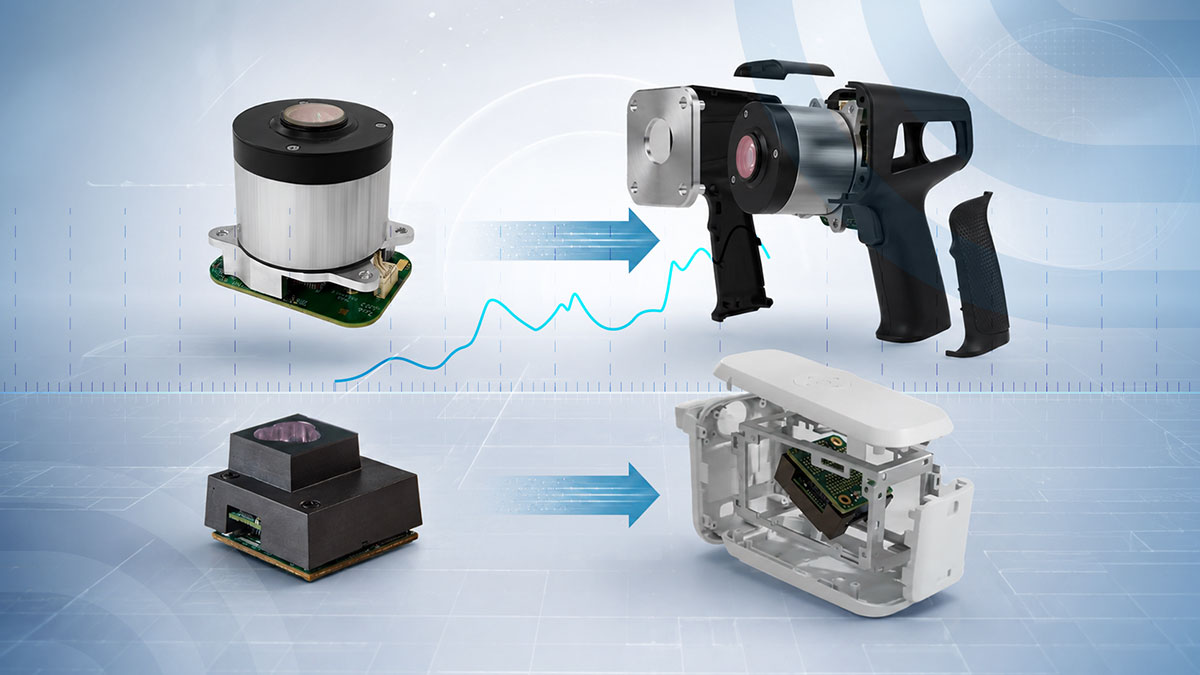
Adding material sensing to a product starts with a practical question: how does your team move from a promising material measurement to a sensor that can work inside a real product?
For product teams evaluating Near-Infrared (NIR) spectroscopy, that journey usually begins with feasibility. A plug-and-play Development Kit helps teams test materials, define sampling conditions, understand performance requirements, and reduce technical risk before moving toward embedded design.
As those requirements become clearer, the focus shifts from proving that the measurement works to determining how the sensing architecture should fit into the product. The goal is not to choose a shortcut. It is to move step by step from material testing to product integration with fewer avoidable unknowns.
Why the NIR Integration Path Matters
An NIR spectrometer helps products and systems analyze materials without damaging the sample. This can support many applications, from smart instruments and automation systems to robotics, agriculture, health and beauty, life sciences, manufacturing, and field inspection.
The challenge is that material sensing depends on the full measurement workflow. The final result is shaped by the sample, the optical setup, the mechanical design, the software workflow, and the decision the product needs to make from the spectral data.
At the beginning of a project, integration teams may still be asking whether Near-Infrared spectroscopy can detect the property they need or not. Later, the question becomes whether the NIR sensor can fit inside the product, connect to the system architecture, and perform reliably in the intended environment.
Start with A Development Kit for Feasibility Testing
A Development Kit is usually the right starting point when the team needs evidence before deeper engineering work begins. It is basically a plug and play testing platform that uses the sensor you are considering for your application, giving you a way to evaluate feasibility from day one.
Explore the Development Kits: Si-NIR Mini DVK | Si-NIR Matrix DVK
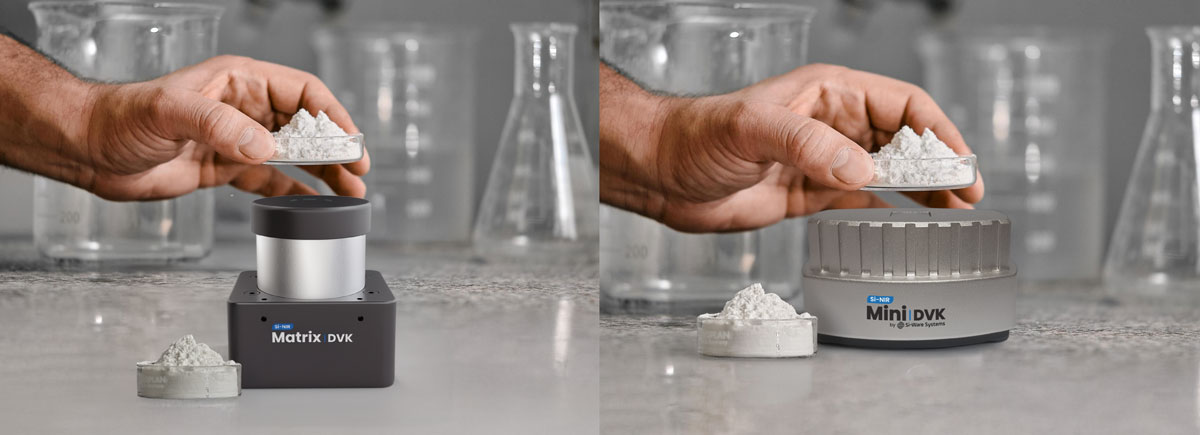
This path is a must because the product team is still defining the application, testing multiple material types, comparing sampling approaches, or deciding whether NIR spectroscopy can meet the required performance level.
With a Development Kit, such teams can analyze target materials from day one, test sample presentations, evaluate repeatability, and explore calibration needs before committing to custom hardware, firmware or even software. This helps product and engineering teams learn quickly while the cost of changing direction is still low.
For many embedded sensing projects, this early learning stage is where the largest risks become visible. A material may respond differently than expected. A sampling setup may work in the lab but fail under real handling conditions. A product concept may need a different sensor configuration than the team first assumed.
A Development Kit allows a structured way to answer these questions before the design becomes harder to change.
Move Toward OEM Sensor Integration When Requirements are Clear
When the team has enough confidence in the application and needs to design sensing directly into a product or system, this is the optimal time to look for a suitable OEM NIR sensor.
At this stage, the team should already understand the target material, the expected sensing environment, the available mechanical space, the preferred sampling method, and the software or data workflow. The work shifts from feasibility testing to integration planning.
OEM integration requires careful attention to the optical path, sample interface, electrical connection, firmware, application programming interfaces (APIs), calibration workflow, enclosure design, production expectations and software. These details affect whether the sensor can move from a promising prototype into a reliable product.
For companies building instruments, handheld devices, smart automation systems, robotics platforms, mobility systems, or connected products, this is where the sensing architecture becomes part of the product architecture.
What to Validate Before Moving from Development Kit to OEM Sensor
Before moving from fast feasibility to OEM integration, product teams should validate the assumptions that will shape the final design.
A useful checklist includes:
- Target material type: confirm the physical state and consistency of the material.
- Measurement goal: define the chemical components or material properties that need detection.
- Sampling setup: decide how light will interact with the material in real use.
- Required spectral range: confirm that the target signatures fall within the right wavelengths.
- Repeatability: verify consistent data under expected deployment conditions.
- Mechanical fit: map the available space and form factor limits.
- Electrical interface: define power requirements and data communication protocols.
- Software workflow: determine how spectral data becomes an actionable decision.
- Calibration needs: plan for long-term accuracy and drift management.
- Operating environment: account for temperature, dust, moisture, vibration, and handling.
- Production path: consider scale, manufacturing needs, and unit economics.
This checklist helps teams avoid treating NIR sensing as a component selection exercise. The sensor matters, but the full sensing workflow determines whether the product can deliver reliable material insight in real use.
Why MEMS-Based FT-NIR Matters for Embedded Material Sensing
Traditional spectroscopy has often been associated with lab instruments, expert users, and controlled sample workflows. Embedded product teams need spectral sensing that can move closer to the material, the process, and the product decision.
Si-Ware Systems has spent more than 20 years developing miniaturized spectral sensing technology, with more than 130 patents and over 15,000 sensors delivered. Its NIR portfolio is built around MEMS-based FT-NIR architecture, combining compact design with broad spectral capability.
Si-Ware’s NIR portfolio supports the widest spectral range [1,350 to 2,550 nm] in compact form, enabling non-destructive material analysis for teams that need to integrate, evaluate, or deploy sensing outside traditional lab settings.
Choosing OEM FT-NIR Sensors by Integration Constraint
Si-Ware Systems offers two OEM Near-Infrared sensor paths for different integration needs: Si-NIR Mini Sensor and Si-NIR Matrix Sensor. Both are built for compact FT-NIR
sensing, but they solve different product constraints.
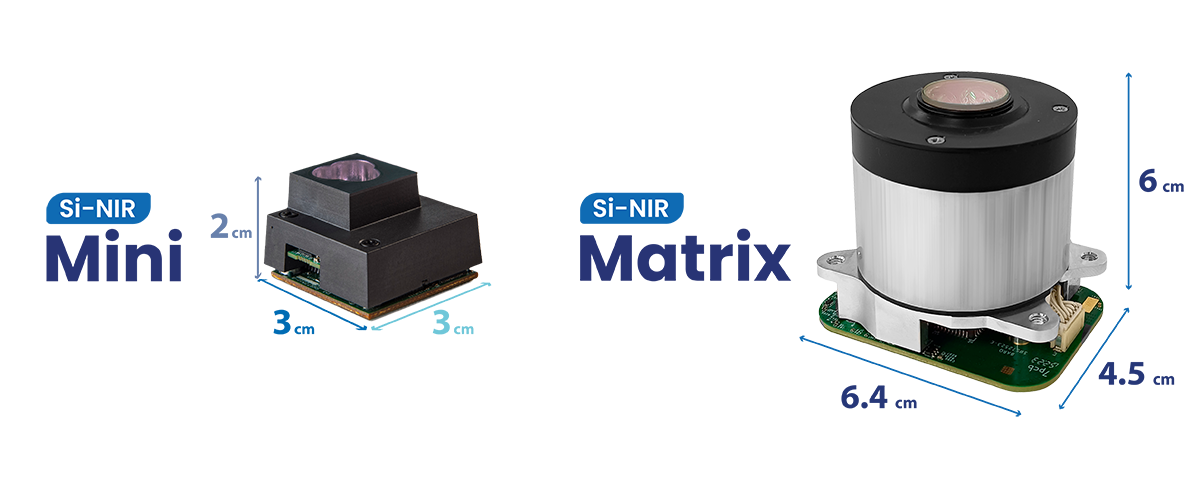
The Si-NIR Mini Sensor is suited for products where size, weight, and integration space are critical. It is designed for homogeneous materials and compact devices where embedded material analysis needs to fit inside a limited product envelope. [Learn More]
The Si-NIR Matrix Sensor is suited for broader material-sensing needs, especially when samples are inconsistent, granular, mixed, or heterogeneous. Its larger sampling area makes it a strong fit for many real-world material analysis applications where the sample surface or composition may vary. [Learn More]
The practical question is which sensor matches the material, sampling method, and product constraint. Review & compare the full technical specifications before choosing the right OEM sensor: [Compare Si-NIR Mini & Matrix]
From Feasibility to Embedded NIR Sensing
Successful NIR integration is a staged process. A Si-NIR Mini Development Kit or Si-NIR Matrix Development Kit allows teams to test target materials, refine the sampling setup, assess repeatability, and define calibration, software, mechanical, and environmental requirements using the same sensor technology they may later integrate. Once those requirements are validated, the corresponding OEM sensor can become part of the product architecture. This progression reduces avoidable redesign and creates a clearer path from early material testing to reliable embedded sensing.

